
“I Wasn’t Ready to Give Up on Myself”
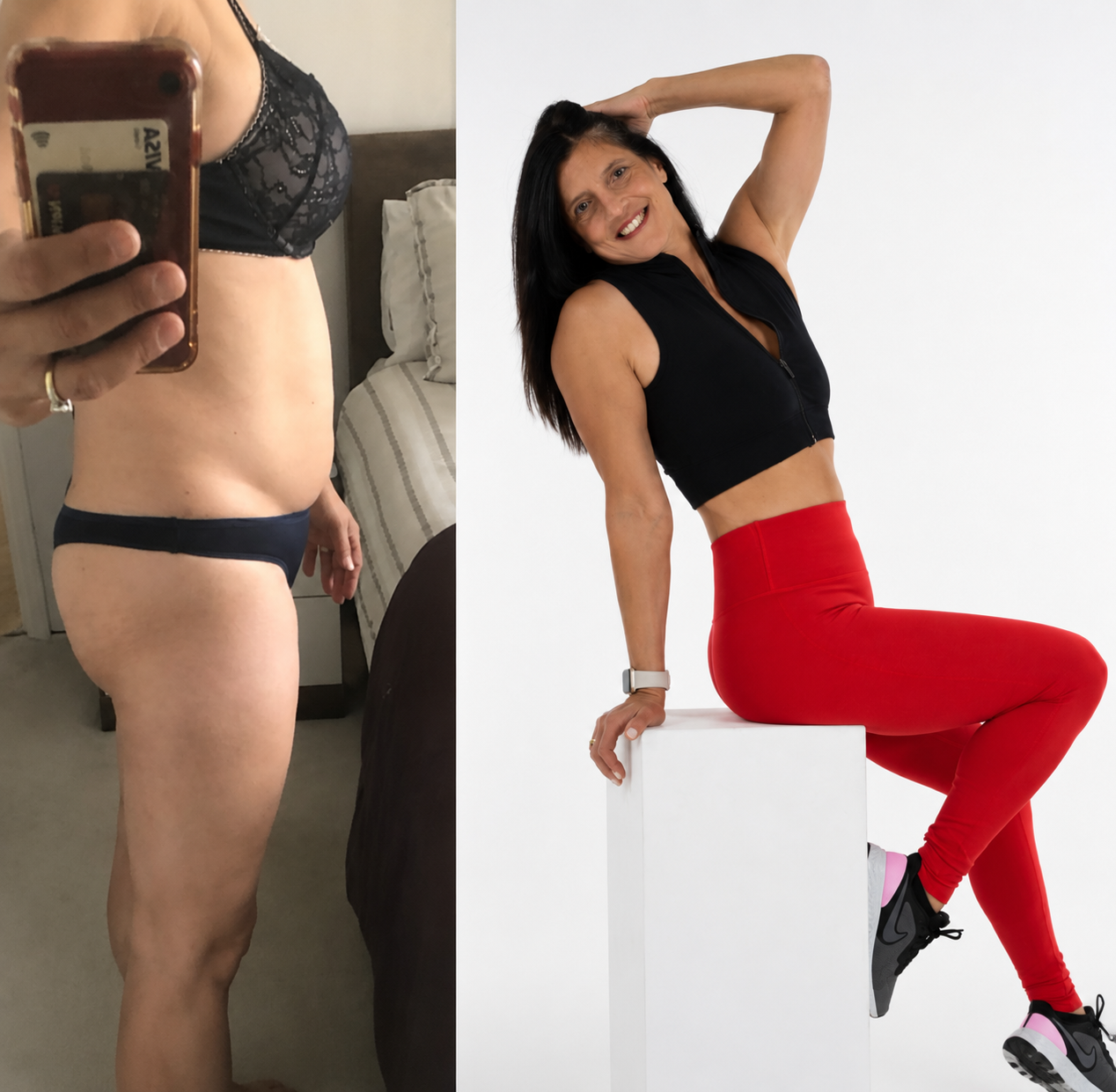
“I Wasn’t Ready to Give Up on Myself” – Maria’s Menopause Fitness Journey at 56
At 56 years old, Maria came to jas our menopause specialist feeling stuck.
Like so many women navigating perimenopause and menopause, she was dealing with constant aches and pains, hot flushes, low energy, and mental fatigue. She no longer felt like herself. Even simple things — like having the energy to walk the dog after a demanding workday — were starting to feel harder than they should.
And alongside all of this, Maria was balancing a high-pressure managerial career.
She knew one thing for certain: this wasn’t how she wanted to continue feeling.
Maria didn’t want to simply “accept” feeling tired, weak, and out of shape as part of getting older. She wanted to feel capable again. Strong again. Energised again.
So we got to work.
The Plan: Strength, Structure & Consistency
Rather than overcomplicating things, we focused on the foundations that truly matter during perimenopause and menopause:
- Strength training several times per week
- A small amount of cardio
- Daily movement and step goals
- A structured plan to follow consistently
Most importantly, we removed the guesswork.
Maria didn’t rely on motivation or mood. She committed to showing up and following the plan — even on the days she didn’t feel like it.
And that consistency changed everything.
The Results
Today, Maria is stronger, fitter, more toned, and more capable than she has felt in years.
She has more energy for daily life, more confidence in her body, and far less of the physical and mental fatigue that once held her back.
Her transformation isn’t just about aesthetics — it’s about quality of life.
It’s about proving to herself that menopause does not mean giving up on your health, strength, or confidence.
Why Strength Training Matters During Menopause
Research continues to show just how powerful strength training is for women during perimenopause and menopause.
Studies have found that resistance training can:
- Improve muscle mass and strength
- Reduce joint aches and pains
- Improve bone density and reduce osteoporosis risk
- Help manage body fat and metabolic changes
- Improve mood, confidence, and mental wellbeing
- Reduce fatigue and improve overall energy levels
Women can lose up to 3–8% of muscle mass per decade after the age of 30, with the decline accelerating during menopause. Strength training is one of the most effective ways to counteract this.
Research also shows that regular exercise can significantly improve menopause-related symptoms including sleep quality, mood disturbances, and overall physical function.
Now, menopause symptoms will be different for every woman. There is no “one size fits all” experience.
But what we do know for sure is this:
Staying active and building strength can dramatically improve how you feel physically and mentally during this stage of life.
You Do Not Have To Navigate Menopause Alone
Maria’s story is proof that it is never too late to prioritise your health.
You are not “too old.”
You are not “past it.”
And you absolutely do not have to settle for feeling exhausted and uncomfortable in your own body.
With the right structure, guidance, and support, your body is capable of far more than you think.
If you’re struggling with menopause symptoms and want guidance from a coach who specialises in menopause coaching, email info@vyvegym.com today.